
Lifting Granite Slabs with a Vacuum Lifter
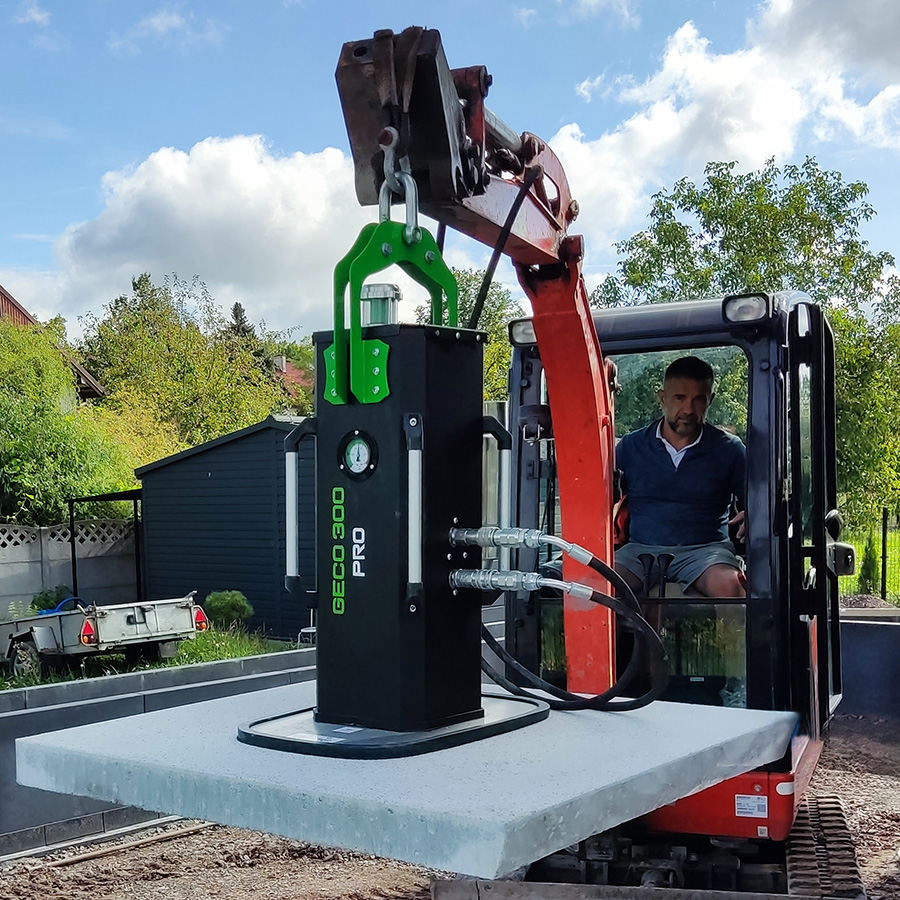
Lifting Granite Slabs with a Vacuum Lifter
Fast, safe and precise method for transporting granite – safety rules, technical requirements and GECO model selection guide
Why use a vacuum lifter for granite?
Granite is a heavy and brittle material – the right equipment eliminates the risk of damage and injury
Speed
Lift and transport a heavy granite slab in seconds – without manual carrying by multiple workers.
Safety
Buffer tank and audible/visual alarm ensure continuous vacuum even in the event of a power failure.
Precision
Accurate slab placement without risk of scratching the polished surface or chipping granite edges.
Versatility
Compatible with cranes, gantries, mini-excavators and forklifts – one device for various machines.
Safety rules when working with granite
Following these rules ensures maximum safety and longevity of the vacuum lifter
Surface cleanliness
Granite must be dry, free from dust, oils, water and loose particles. Even minor contamination can break the seal and cause a sudden vacuum drop.
Wipe the surface before liftingSeal inspection
Before every use, check the rubber sealing elements for cracks, deformation and wear. A damaged seal will not provide sufficient adhesion on the hard, smooth granite surface.
Replace the seal at the first signs of wearPressure gauge reading
Always ensure the vacuum indicator has reached the required level (green zone) before lifting the slab. Never lift a load with insufficient vacuum.
Green zone = safe to liftSlab assessment
Do not lift slabs with visible cracks or chipped edges. Granite is an impermeable material – it naturally achieves excellent vacuum and strong grip. The only real risks are surface contamination and mechanical damage to the slab itself.
Check the slab for cracks before liftingWhen transporting granite slabs with a vacuum lifter, no persons may be present in the zone beneath the suspended load. In the event of sudden loss of vacuum, a heavy granite slab poses a fatal hazard.
Technical requirements
Parameters that determine safe and effective granite lifting
| Parameter | Description | Practical note |
|---|---|---|
| Lifting capacity | Read from the load capacity table on the suction pad based on current vacuum level | Monitor the gauge at every lift |
| Power supply | Electric (battery or mains) or hydraulic (min. 20 L/min, 150 bar) | GECO 200/300 – electric; GECO 300 PRO – excavator hydraulics |
| Working vacuum | Min. 45 KPA for stable grip on polished granite | Monitor the gauge continuously during transport |
| Safety systems | Buffer tank + audible/visual alarm on vacuum drop | Alarm allows safe lowering of the load before grip is lost |
| Surface condition | Dry, clean, smooth – free from dust, oil and moisture | Polished granite provides optimal seal adhesion |
Every suction pad on a GECO lifter has a load capacity table showing the safe lifting capacity at each vacuum level. Simply read the current value from the pressure gauge and compare it with the table – this is more reliable than theoretical calculations, as it accounts for real working conditions.
Which GECO model to choose?
Three models – two drive types – one goal: safe lifting of granite slabs
GECO 200
⚡ Electric- Lifting capacity up to 200 kg
- Battery or mains powered
- Ideal for light and medium granite slabs
- Compatible with crane, gantry, mini-excavator
- Compact – easy to transport on site
- Alarm on vacuum drop
GECO 300
⚡ Electric- Lifting capacity up to 300 kg
- Increased suction power – more suction pads
- For heavy and large-format granite slabs
- Compatible with crane, gantry, excavator
- Buffer tank – reaction time on power failure
- Alarm on vacuum drop
GECO 300 PRO
🔧 Hydraulic- Lifting capacity up to 300 kg
- Hydraulic drive (min. 20 L/min, 150 bar)
- Designed for excavators and construction machines
- Working vacuum 45 KPA
- Max. pressure 200 bar – industrial operation
- Own weight 38 kg
Order your GECO vacuum lifter
Choose the model suited to the weight and format of your granite slabs
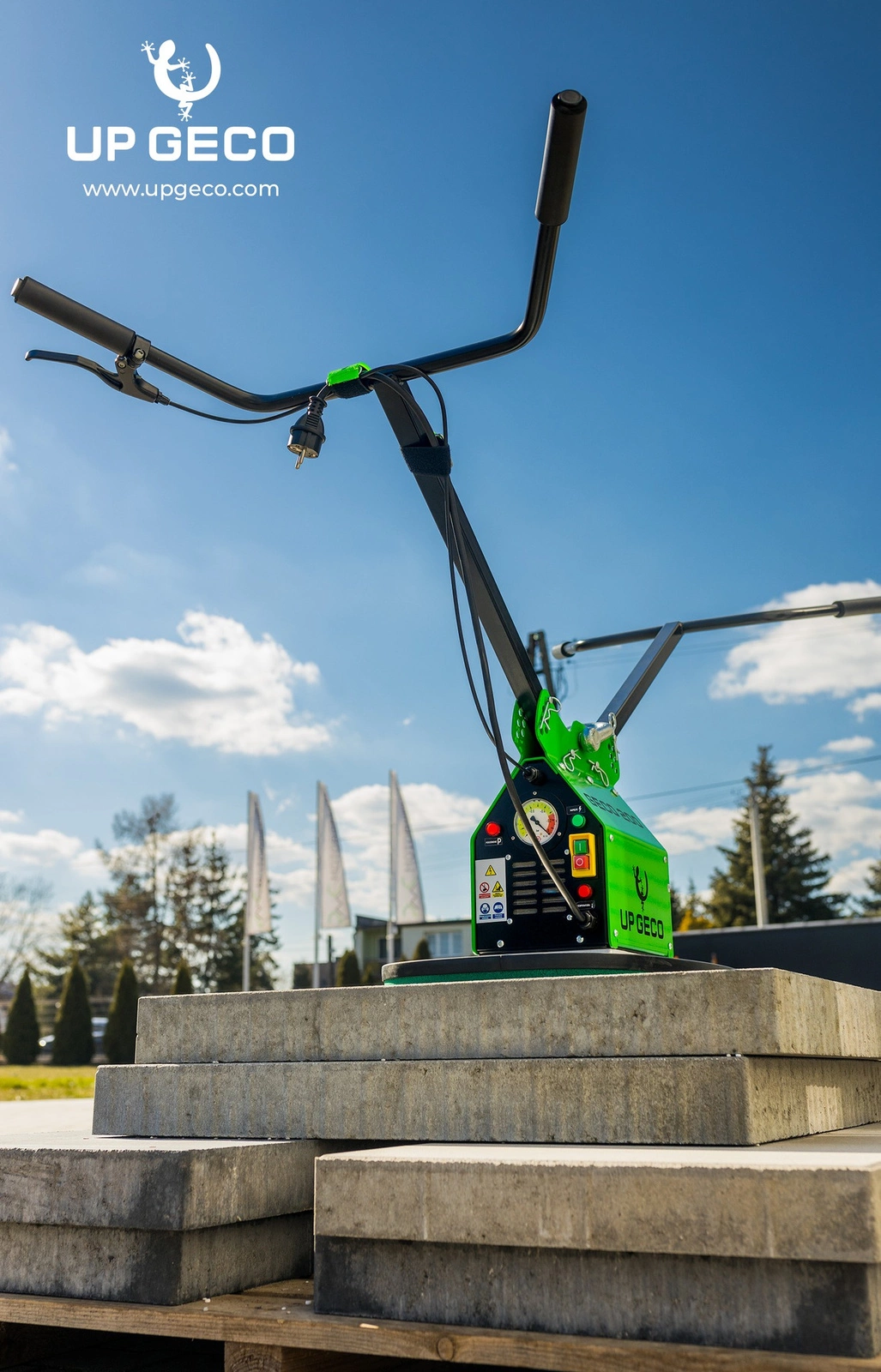
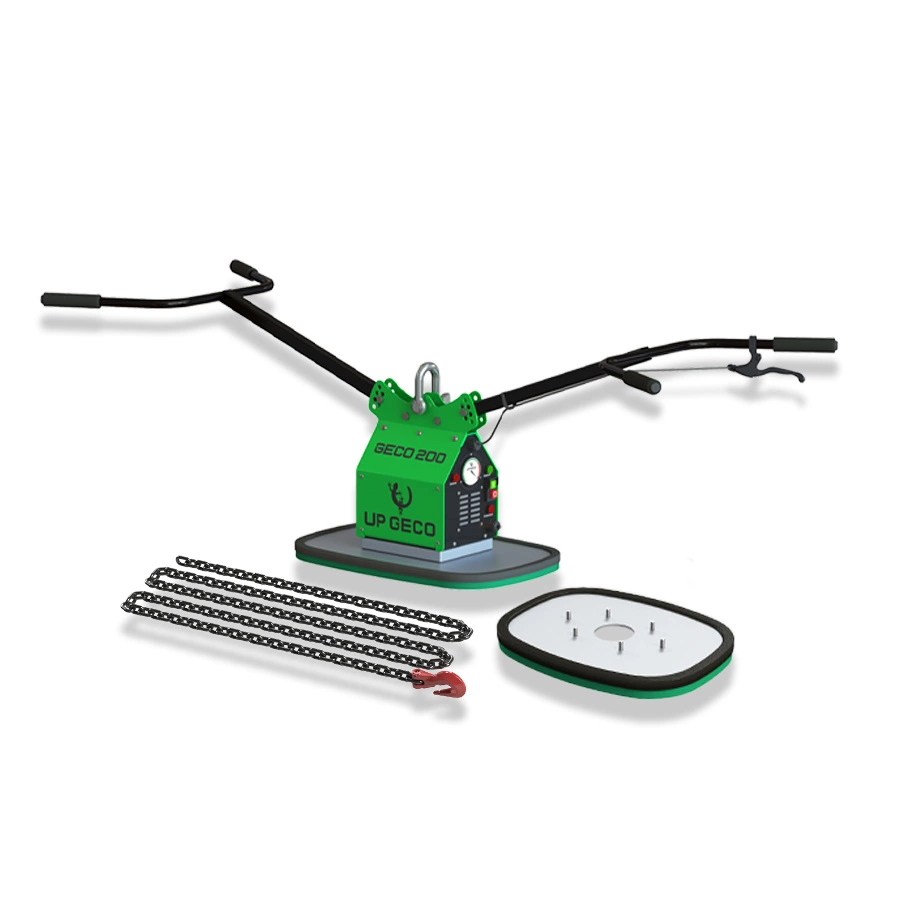
Vacuum Lifter GECO 200
Electric vacuum lifter for lifting and transporting granite slabs up to 200 kg. Battery or mains powered. Alarm on vacuum drop.
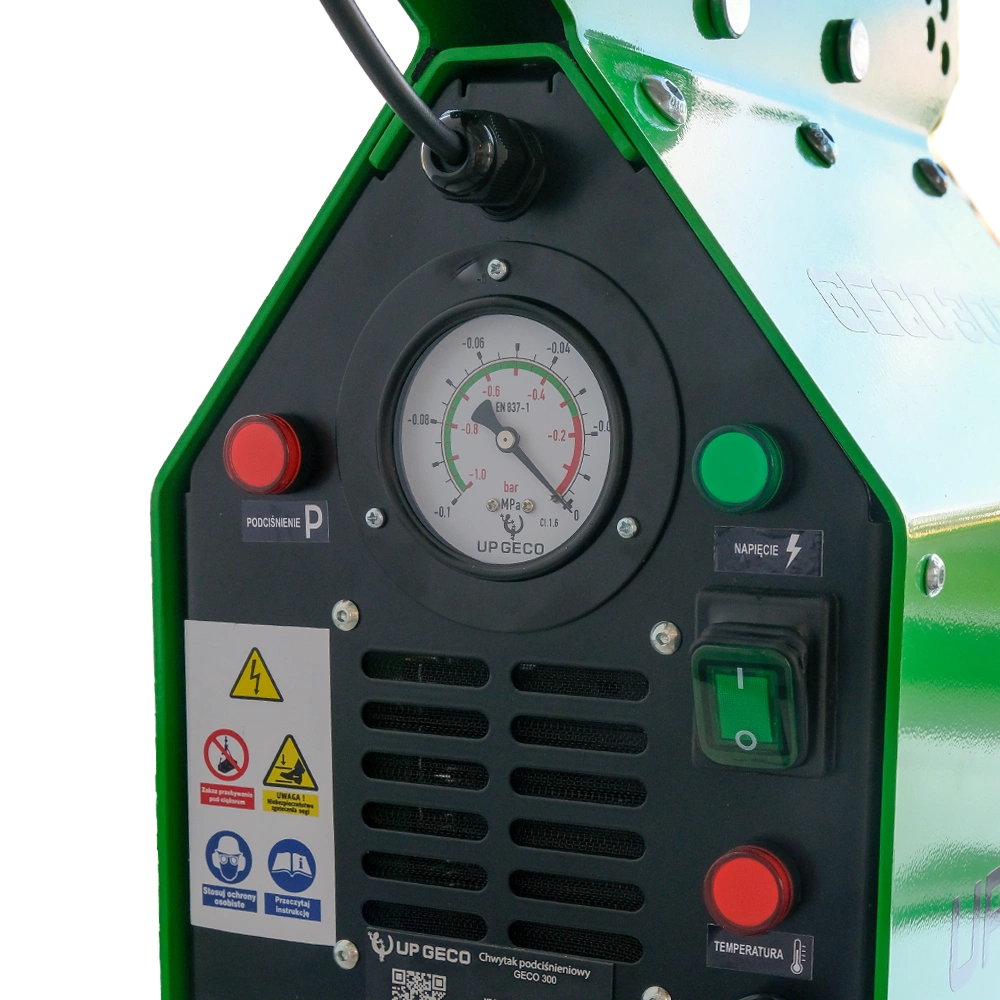
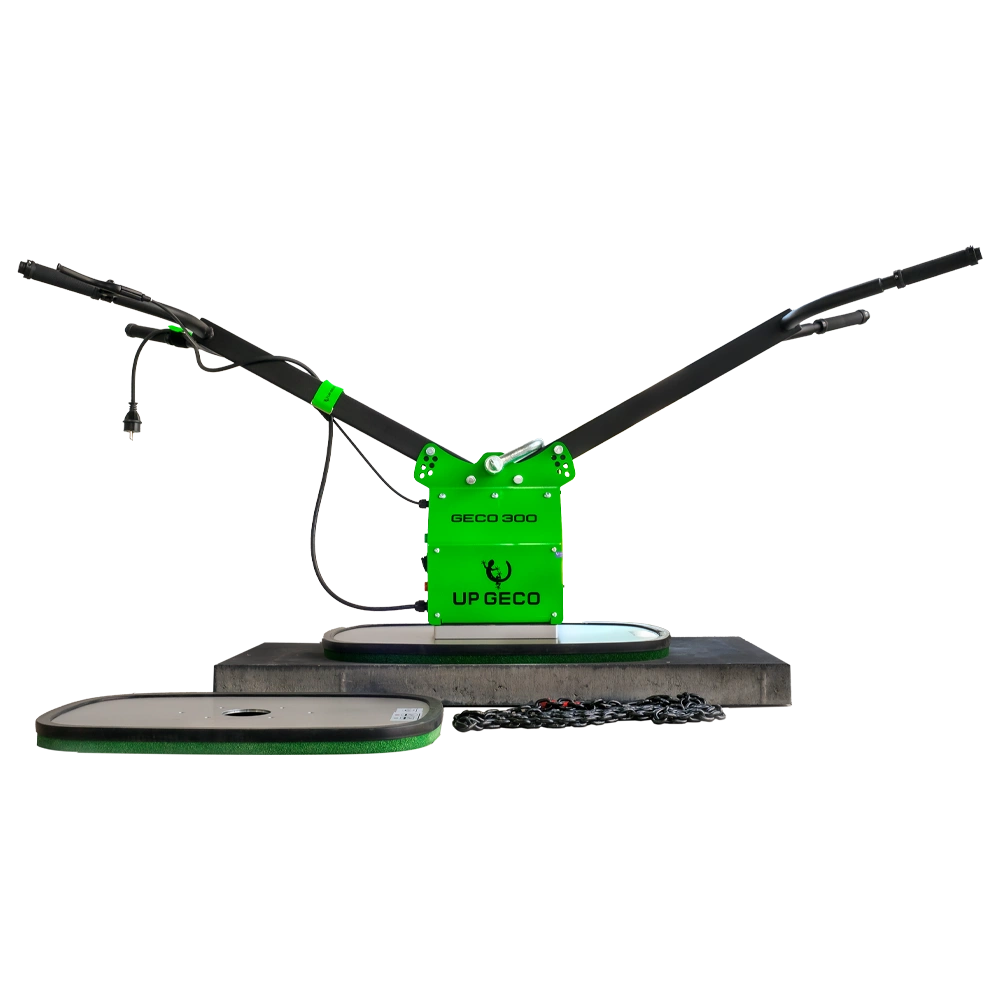
Vacuum Lifter GECO 300
Electric vacuum lifter for heavy granite slabs up to 300 kg. Increased suction power, buffer tank and alarm. Compatible with cranes and gantries.
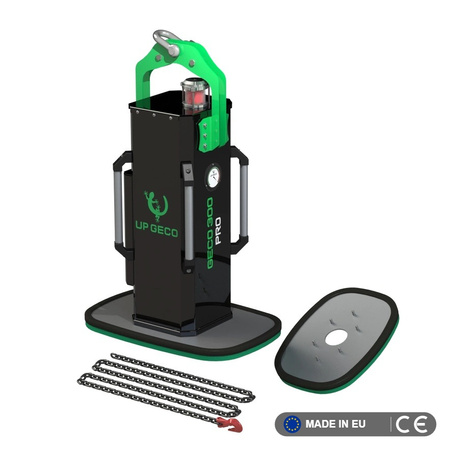
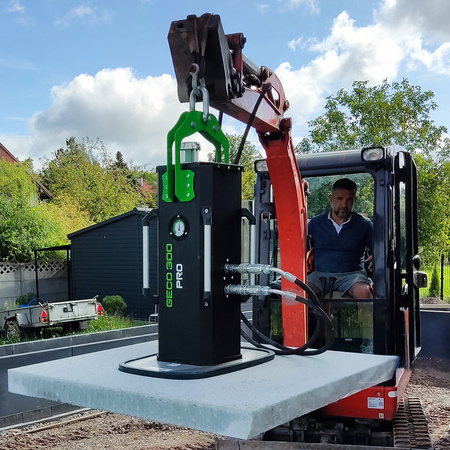
Hydraulic Vacuum Lifter GECO 300 PRO
Hydraulic vacuum lifter for excavators and construction machines. Lifting capacity 300 kg, vacuum 45 KPA, working pressure 150 bar. Ideal for industrial granite slab handling.
Frequently asked questions
Answers to questions about lifting granite slabs with GECO vacuum lifters
Choose the right lifter for granite
Contact us – we will help you select the GECO model suited to the weight and format of your granite slabs